By (Obi Amabuo-SolarHieght)– Solar Commentator & Energy Insider
The new wave of defection that just begun again in the Nigerian political parties, had already started in the power sector. If you still believe the Nigerian grid will come back tomorrow, you are no longer an optimist.
You are a liability to your own finances.
While the rest of the world debates energy transition, Nigeria is experiencing a silent, violent, and permanent divorce. The wealthy, the savvy, and the productive are leaving the national grid. And they are never coming back.
This is not a guess. This is math.
In 2025 alone, Nigeria installed 803 megawatts (MW) of new solar capacity. That brought our total to nearly 1.19GW.But here is the statistic that should keep every DISCO manager awake at night: 96% of that new capacity is OFFGRID. Rooftops. Factories. Minigrids. Small businesses. The people who actually pay for electricity have stopped waiting for you. They have built their own power plants. Welcome to the great Defection
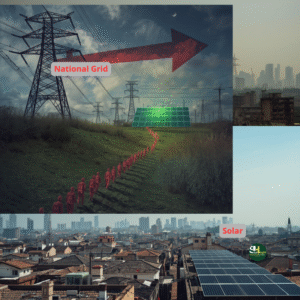
The Silent Statistics No One Is Talking About
Let me break down what 1.19GW actually means.
1.19GW is roughly 40% of the erratic power the national grid sometimes generates. That 803MW added in 2025 is larger than the entire grid capacity of some West African countries. And the kicker? The grid is actually shrinking in terms of paying customers.
Every week, three things happen:
1. A wealthy household in Lekki spends ₦3–4M on a solar system and disconnects from the grid permanently.
2. A small business owner in Aba installs solar for their factory and stops paying DISCO tariffs.
3. A rural community switches on a minigrid and never looks back.
The utility is left with the poor, the desperate, and the disconnected.
The Death Spiral Has Already Begun
Here is the painful cycle that no government official wants to admit in public.
No.1: High paying customers (industries, SMEs) defect to solar.
No. 2: The DISCO loses its best revenue source.
No. 3: To cover fixed costs, the DISCO raises tariffs on remaining customers.
No. 4: Those remaining customers (already struggling) can no longer afford the higher tariffs.
No. 5: They also defect—or simply stop paying.
This is called the Utility Death Spiral.
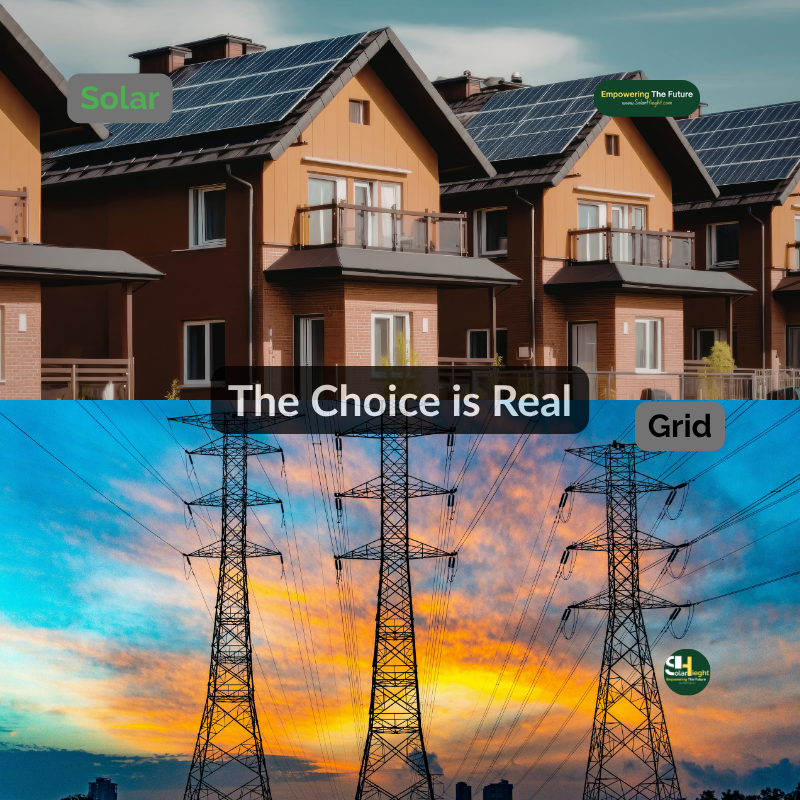
And Nigeria is already spinning.
Realtime example: In Lagos, DISCOs now rely on estimated billing for over 60% of their residential revenue. Why? Because if they installed actual meters, customers would see how little power they actually receive, take other measures, refuse to pay, and defect to solar even faster. The utility is trapped. And they know it.
What Happens Next? 3 Predictions for 2026–2030
Prediction 1: Hybridization Becomes Mandatory (The Grid as Backup)
By Q2 2027, no new business in Lagos, Abuja, or Port Harcourt will open without a solar hybrid system. Not because of regulations, but because of survival. The grid will not disappear, but its role will change forever. It will become a glorified backup generator—expensive, unreliable, and only used when the batteries run dry.
What this means for you: If you are building a new house or business and you do not budget for solar, you are building a liability, not an asset.
Prediction 2: The Local Manufacturing Boom (Price Stabilization)
Right now, we are bleeding foreign exchange on every solar panel imported. A 550W panel that cost ₦80,000 in 2024 now costs over ₦250,000. But the tide is turning. The $750 million DARES program is not just a talking point. It is funding local assembly plants. By Q4 2026, we will see the first major price drop as locally assembled panels enter the market.
What this means for you: If you can afford to buy solar today, do it. But if you are on a tight budget, wait until early 2027. Local assembly will crash prices by at least 30–40%.
Prediction 3: The End of Diesel Logistics
Let me say this clearly: The diesel generator industry is dying. It will not disappear overnight. But every new solar installation is a nail in its coffin. By 2028, the only people running generators 24/7 will be those too poor to afford solar- a tragic irony.
If you are an investor holding diesel distribution assets, sell them now. The secondary market for generators is already flooded with cheap fairly used units. That is a dead market walking.
Investor Advice: Where to Put Your Money (And Where to Run From)
I talk to investors every week who want to get into solar. Most of them are looking in the wrong places.
Here is where you should and should not invest.
Stop Investing In:
Hardware retail (solar shops): Margins are crushed by FX volatility.
Diesel logistics: Read the room. The obituary is already written.
Standalone gridtied inverters (no battery): Useless when the grid collapses at 7pm.
Start Investing In:
1. SolarasaService (Leasing/Subscription)
SMEs do not want to spend ₦5M upfront. They want to pay ₦150,000 monthly for five years.
Companies leading this: Victron Energy, Earthbond, Arnergy, Rensource.
Why it works: You earn recurring revenue (OPEX), not onetime sales (CAPEX). The customer wins, you win, and the cash flow is predictable.
Investor action: Back asset financing companies, not installers. The money is in the financing, not the hardware.
2. Cold Storage & AgroProcessing (Productive Use Solar)
The biggest ROI in Nigerian solar is NOT selling electricity to homes.
It is selling electricity to businesses that make money from power.
Examples:
Solarpowered cold rooms for tomato sellers (reduces postharvest loss from 60% to 5%).
Solar mills for rice and cassava (replaces expensive diesel mills).
Solar irrigation for dryseason farming (turns unused land into cash flow).
Why it works: A homeowner saves ₦50,000/month on fuel. A cold room owner earns an extra ₦500,000/month in preserved goods. Which is the better investment?
Investor action: Partner with agricultural cooperatives. Offer leasetoown cold rooms. The repayment rates are higher than residential solar because the income is provable.
What Solar Users & Enthusiasts Must Do Now
If you are a homeowner, a renter, or someone who just wants light and AC, here is your honest action plan.
1. Stop Waiting for the Grid to Improve
The grid is not going to be fixed in 2026. Or 2027. Or 2028.
The transmission infrastructure requires billions of dollars and years of political will. Neither is coming soon.
Your job: Treat solar as your primary power source. Treat the grid as a free bonus if it shows up.
2. Buy Lithium, Not Tubular Batteries
Yes, lithium batteries are expensive upfront (₦1.5–3M for a good 5kWh system).
But here is the truth:
Tubular batteries need distilled water monthly, release hydrogen gas (dangerous indoors), and last 3–5 years.
Lithium batteries are sealed, maintenancefree, last 8–10 years, and have builtin battery management systems (BMS) that prevent overcharging and fires.
A lithium system costs more today. But it is cheaper over 10 years. Do the math.
3. Buy Now If You Can Afford It
Prices are not coming down until the Naira stabilizes or local manufacturing ramps up (late 2026 or early 2027).
If you have the money today, buy today. Every month you wait with a generator, you burn that money in fuel.
If you cannot afford a full system today, start small:
A solar generator (2.5kW/2kWh) for ₦800k–1.2M.
Add panels gradually.
Add more batteries later.
Do not let perfection be the enemy of progress. Intimate yourself of the current trends
The Final Verdict: What Does This Mean for Nigeria?
The Great Defection is not a crisis. It is an opportunity.
Yes, the utility will struggle. Yes, tariffs will rise for the poor. That is the painful truth.
But here is the bigger truth:
Nigeria is building a decentralized, resilient, independent power system—one rooftop at a time.
By 2030, I predict:
Over 5GW of distributed solar across rooftops, minigrids, and C&I sites.
At least 3 major local assembly plants producing panels and batteries.
A generation of Nigerian engineers and installers who are worldclass.
The grid is dying. But Nigerian energy is being reborn.
The question is not whether you will go solar.
The question is whether you will be early—or left behind.
Your Next Step (No Sales Pitch, Just Advice)
If you are ready to explore solar for your home or business:
1. Get at least three quotes from verified installers (ask for previous projects).
2. Demand lithium batteries with a minimum 5year warranty.
3. Ask about lease or subscription options if upfront cost is a barrier.
And if you want to stay ahead of every trend, every price shift, and every industry scandal?
Follow this page. Share this post. And let’s build a solar Nigeria together.
SolarNigeria TheGreatDefection RenewableEnergy InvestInSolar OffGridLiving NigerianEnergy
Want a downloadable PDF checklist: 10 Questions to Ask Before Buying Solar in Nigeria 2026? Drop a comment or send a DM.